
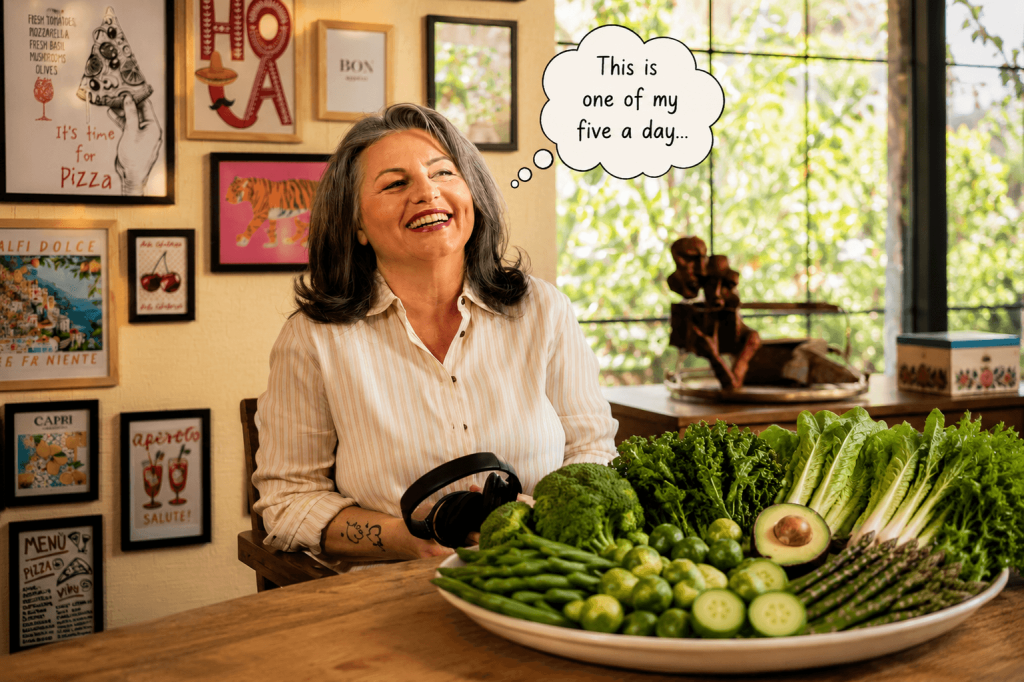
I’ve been trying to solve this specific problem for a long time. I needed to eliminate the stress of thinking and planning a healthy meal for day in day out which was absolutely exhausting.
I’ve been trying to solve this specific problem for a long time. We all know more or less what healthy eating looks like. And we all have jobs, kids, parents, schools, stuff to do. These things don’t go together. Who has time to plan meals for the whole week, batch cook and store, or come home in the evening to have all fresh ingredients and a perfect recipe to cook a fresh meal? We do have to occasionally succumb to the odd bad meal for the sake of convenience. At the end of the day, stress could well be more harmful than an ultra-processed meal filled with chemicals. I really don’t know if this is scientifically true, but at the end of a long hard day, I don’t want the additional stress of making a freshly cooked, organic, sustainably and ethically sourced, ketogenic low-carb, high-protein, high-green-veg meal, even though that is exactly what I want to eat.
Most healthy eating systems focus on nutritional optimisation and there are endless recipes and meal plans out there. But it doesn’t solve your problem does it? The reality is that most people don’t fail because they don’t know that vegetables are healthy. They fail because they are tired, busy and forced to make dozens of food decisions every week. It’s a huge amount of cognitive overload to go through the decision-making and planning process just to have a health plate of food. So I created this simple framework that focuses on behavioural optimisation first and nutritional optimisation second.
On this page, I’ll explain my simple healthy meal selection framework that made my life so much easy and straightforward.
Over the years I’ve spent countless hours reading books, listening to podcasts, attending conferences, interviewing practitioners and researching nutrition. And I do enjoy all of these immensely. I’m a perpetual learner and I’m determined to celebrate my 100th birthday in good health. But I’ve gained this knowledge through the hard way, by following every diet under the sky, Mediterranean diet, Atkins, Weight Watchers, Slimming World, Slimfast, Whole30, Raw diet, vegetarian, vegan, gluten free, Cambridge diet, Rosemary Conley diet, appettite suppressing pills, calorie counting, 5:2 fasting; I had exercise bikes at home, countless gym memberships, a personal trainer, I had a dietitian, health coach, life coach, nutritional therapist, hypnotherapy, oh my god I actually feel depressed right now. And all this time, I kept gaining weight. What I was missing is that my metabolism was broken and the signals in my body were just not working right.
Like many people interested in health, I accumulated a huge amount of information. Despite understanding nutrition reasonably well, I still found myself standing in front of the fridge wondering what to cook. Sometimes I’d spend more time thinking about meals than actually preparing them. The sheer number of choices created unnecessary mental clutter. I realised that healthy eating doesn’t fail because people don’t know what vegetables are. It often fails because modern life creates too many decisions.
The solution to your problems is not another diet. You do know what’s going to happen with that. Your solution lies in establishing a framework for simple eating. Eventually I realised that almost every meal I genuinely enjoy fits into one of four categories.
- Soup
- Salad
- Stir-fry
- Smoothie
That’s it. So the “4S Kitchen Framework” was born. Heck even my NHS Health Coach loved the idea and started using it on his other patients.
The 4S Kitchen Framework
This is really super simple. But remember simplicity is the key goal here to reduce the cognitive load. Instead of choosing from thousands of recipes, I first choose one of four meal types. Do I want to soup or salad or stir-fry or smoothie today? That’s the first decision to make. It does make the rest of the decision-making so much simpler.
S1: Soup
This category includes all soups, stews and casseroles. It’s one of the easiest ways to consume large quantities of vegetables. They are ideal for batch cooking, freeze well and can be adapted to almost any cuisine.
Mediterranean vegetable soup, Turkish guvec or lamb stew, Italian chicken and kale soup and Asian mushroom broths all fit comfortably into this category. Most soups become even better the following day.
S2: Salad
Literally everything you have in the fridge can be mixed to make a salad that involves zero to little cooking. We’re not talking side salads with a few leaves of lettuce. These are substantial meals built around protein, healthy fats and large quantities of vegetables. A proper meal salad might contain grilled salmon, chicken, eggs or cheese alongside mixed greens, herbs, cucumber, radish, rocket, olive oil and lemon.
The goal should not be dieting or calorie counting. In fact, avoid that at all costs. Your goal is nutrient density. Look for all the good things you can put in your salad. Whatever is in your fridge. No one has ever become obese because of eating too much nuts or extra virgin olive oil. Fatness comes almost exclusively from ultra-processed foods with high sugar.
S3: Stir-fry
When time is limited, stir-fries are often the fastest route to a healthy meal. A quality protein source combined with seasonal green vegetables can be prepared in minutes. All you need is a few basic staples to make it tasty. Any vegetable can be used in a stir fry. Don’t be restricted by specific Asian recipes. The emphasis is on vegetables rather than noodles or rice. Broccoli, pak choi, cabbage, courgette, spinach, mushrooms and green beans form the foundation of many of my favourite stir-fries.
S4: Smoothie
When I say smoothie, I’m referring to something you can drink when you don’t necessarily love eating it. I have a lot of examples of this. Kale or spinach is one of them. It’s a good way to mix a lot of nutrient dense ingredients with half a banana and you won’t even know you’re having kale for dinner. Smoothies allow large amounts of nutrient-rich ingredients to be consumed quickly. I’m not a huge fan of breakfast so smoothies are my favourite go-to for breakfast time.
The taste is not the goal here. Don’t make recipes full of large quantities of fruits as this will increase the sugar content. Use the fruits to add flavour and sweetness to an otherwise potentially bland recipe. Leafy greens, avocado, quality protein, seeds and low-sugar ingredients form the basis of most recipes. They are particularly useful on busy mornings or when appetite is low, energy is low, and the day ahead is pressing.
The Nutritional Principles Behind the 4S Kitchen Framework
My framework removes most of those decisions that are draining:
- Decide your S: salad, soup, stir-fry, smoothie
- Pick a few ingredients you fancy: seasonal and organic where possible
- Cook it.
This is much easier than searching through recipes every day, planning your weekly shopping for a whole evening, only to come home to eat a packet of crisps because you’re exhausted.
It also aligns well with my broader health goals:
- Cancer prevention: high vegetable intake, particularly cruciferous and leafy greens.
- Longevity: nutrient density, adequate protein, healthy fats and minimal ultra-processed foods.
- Inflammation reduction: emphasis on whole foods, herbs, spices and vegetables.
- Weight management: naturally lower carbohydrate and higher satiety.
- Practicality: batch cooking soups and casseroles, quick stir-fries and meal-sized salads.
- Sustainability: enough variety to avoid boredom without becoming overwhelming.
The framework is intentionally simple, but it follows several principles that appear repeatedly across many traditional diets associated with good health.
- The majority of the plate comes from vegetables, particularly green vegetables.
- Protein is included in every meal.
- Meals are naturally lower in refined carbohydrates.
- Healthy fats are welcomed rather than feared.
- Ultra-processed foods are minimised.
- Artificial additives, preservatives, colourings and flavour enhancers are avoided whenever practical.
- Organic animal products are preferred when available and affordable.
These principles are not unique to any one dietary philosophy. Variations of them appear in Mediterranean cultures, many traditional Asian diets and countless ancestral food traditions.
What About Cancer Prevention and Longevity?
Nutrition is only one piece of a much larger health picture. No recipe can guarantee disease prevention and no food should be viewed as a miracle cure. However, there are recurring themes within both longevity research and integrative cancer support approaches. These include consuming more vegetables, maintaining a healthy weight, preserving muscle mass, controlling blood sugar, reducing chronic inflammation and limiting ultra-processed foods.
The 4S Kitchen Framework naturally encourages these habits without requiring calorie counting or complicated meal planning. Instead of focusing on what must be eliminated, the framework focuses on consistently eating more of the foods that support overall health.
If you ask your GP or oncologist or nurse what to eat if you have cancer, most of them will answer “it doesn’t matter what you eat” or “there’s no scientific evidence”. But you don’t need scientific evidence to know that vegetables are good for you. You also don’t need scientific evidence to know that if you drink coke and eat burgers every day, you’re probably not a very healthy person. We’re not saying if you eat this way, you will cure your disease. But keep in mind that:
- Herbs have been used traditionally for hundreds and thousands of years.
- Traditional systems developed empirical knowledge long before modern laboratories existed.
- Modern science has only investigated a small fraction of medicinal plants.
- Lack of research funding is not the same thing as lack of value.
- There are no profits to be made to research the health benefits of a plant.
- Traditional use, practitioner experience and patient experience are all forms of evidence, even if they sit alongside rather than replace modern clinical evidence.
So when your nurse says, eat what you want, it doesn’t matter, use your common sense and take control of your own health.
The Ayurvedic Longevity Spice Blend I Use in Almost Every Hot Meal
This spice blend is not about flavour or taste or deliciousness. In fact, taste and flavour are secondary for me. Every meal you eat is an opportunity to increase your intake of health-inducing herbs and spices. I learned this in the Ayurvedic course by Dr Sam Watts and I’ve been using it in every meal without an exception. I call it my Longevity Spice Mix.
This isn’t a seasoning mix designed to make food taste better. It is a collection of herbs and spices that have been valued for generations across Ayurvedic traditions for supporting health, vitality and healthy ageing. Many traditional cultures understood something that modern nutrition is only beginning to rediscover: small amounts of medicinal plants consumed consistently over decades may have a greater impact than occasional bursts of perfect eating.
To make the blend, I gently melt half a jar of organic ghee and mix in one tablespoon each of powdered ginger, turmeric and triphala. I then add a quarter tablespoon of black pepper together with freshly ground fennel, cumin and coriander seeds. You can keep this in the fridge for several weeks and use it in every recipe. It also saves the time it takes to pick and mix spices each time.
Turmeric is perhaps the best known ingredient. Ayurveda has used it for thousands of years as a rejuvenating herb. Researchers have become interested in its ability to influence inflammatory processes and cellular defence mechanisms. Many people regard it as one of the most valuable longevity spices in the world.
Black pepper serves as the activator. Traditional systems often paired herbs together because they appeared to work better in combination than individually. Modern research later discovered that piperine from black pepper dramatically increases the absorption of curcumin from turmeric.
Ginger has long been associated with circulation, digestion and vitality. It contains numerous bioactive compounds that appear to help the body manage inflammatory stress while supporting digestive function and nutrient absorption.
Triphala is one of Ayurveda’s most respected formulations. Made from three fruits, it has traditionally been used as a daily tonic to support digestion, detoxification and healthy ageing. Many practitioners regard it as a foundational longevity herb because it appears to support multiple systems simultaneously rather than targeting a single symptom.
Cumin has traditionally been used to strengthen digestion and metabolism. It contains a wide range of aromatic compounds and antioxidants that contribute to the body’s natural protective systems.
Coriander is often viewed as a cooling and balancing spice within Ayurveda. It has traditionally been valued for supporting digestion, helping the body process foods efficiently and contributing a rich variety of plant compounds that nourish cellular health.
Fennel has been used for centuries to support digestive comfort and reduce bloating. Beyond digestion, it contains beneficial phytochemicals that contribute to the body’s antioxidant defences and overall resilience.
Ghee in Ayurveda is often described as a carrier that helps transport the qualities of herbs throughout the body. It also provides a stable cooking fat and allows many of the beneficial compounds in the spices to dissolve effectively.
One spoonful of this Longevity Spice Mix added to a pan may seem insignificant. Thousands of spoonfuls consumed over a lifetime will make a significant impact.
The Biggest Surprise Was Not the Food
Once I established my 4S Kitchen Framework, what surprised me was not that the meals were healthy. You don’t need a recipe to make any vegetable a healthy choice. What surprised me was how much mental energy I recovered. I stopped non-stop asking and thinking “What should I eat?” That single change removed a remarkable amount of friction. Healthy eating became easier because fewer decisions were required.
I don’t follow this framework because it’s the perfect diet. All diets are perfect… as long as you’re able to follow them. This really isn’t a diet and I hate the word diet with a burning passion (because it practically ruined decades of my life thinking and worrying about it) I follow it because it’s practical, easy, simple. If you know any nutritional therapy graduates around you, they will tell you, this is really simple, biology is simple, healthy diet is simple, and you definitely don’t need diets, recipe books, meal plans to be healthy, you just need to eat simple, basic, unprocessed, natural food, to be healthy.
One of my old friends took a break from her corporate career and went on to study nutritional therapy. She graduated but decided not to pursue it as a career. When I asked why, her answer was; there really isn’t anything I can “sell” as a therapy, nutrition is very simple, you just need to eat a lot of proteins and vegetables and fats, and stop eating rubbish, there’s nothing else to it, I really don’t know what these therapists, books, authors are all about. There’s your wake-up call.
The best nutritional approach is rarely the one that sounds most impressive. It’s usually the one that you can continue doing year after year. For me, simplifying food into four categories created enough structure to support my health goals while leaving plenty of room for creativity and enjoyment.
My Simple Salad Philosophy
When it comes to salads, I try not to overcomplicate things. Most commercial dressings are filled with cheap seed oils, stabilisers, preservatives, flavourings, sugars and ingredients that simply don’t need to be there. For that reason, I almost always just use one basic dressing: good quality extra virgin olive oil, a whole squeezed lemon, Himalayan salt, freshly ground black pepper and occasionally a little Dijon mustard.
The real magic comes from the herbs. Fresh herbs are often treated as decorative garnishes, but many traditional food cultures have viewed them as an important part of everyday health. Mint, parsley, basil, thyme, fennel fronds, coriander, dill, oregano and sumac can transform a simple salad into something vibrant, fragrant and deeply nourishing. These plants contain a remarkable diversity of protective compounds that evolved to defend the plant itself and may also support our own resilience when consumed regularly.
One of the easiest ways to increase herb consumption is to grow them yourself. Even a small herb garden on a windowsill, balcony or patio can provide a constant supply of fresh leaves throughout much of the year. Home-grown herbs are often more aromatic, more flavourful and far fresher than anything that has spent days travelling through a supply chain.
A habit I particularly like is making a Fresh Herb Paste. Rather than letting herbs wilt in the fridge, I blend large handfuls of whatever is available, such as parsley, basil, mint, thyme, fennel fronds or coriander, with extra virgin olive oil to create a thick green paste, a bit like the Pesto sauce. Sometimes I add a little garlic, lemon juice or mustard. Stored in a jar in the fridge, it becomes a ready-made flavour and nutrition boost that can be stirred through salads in seconds. It’s not something you can keep for weeks or months but it saves the trouble of making it for 3-4 salads and eliminates waste. After all, it’s near impossible to make a salad for one, you always end up with a huge pile.
The Missing Ingredient: Satiety
One thing I’ve learned over the years is that healthy eating only works if you’re satisfied after eating. Many modern diets focus on reducing calories, but few pay enough attention to satiety. If a meal leaves you searching the cupboards an hour later, it doesn’t matter how healthy it looked on paper. So your food always needs a Satiety Anchor. This is what will get you the GLP-1 or Mounjaro or Ozempic effect. This may become the 5th S in my Kitchen Framework, we’ll see…
The first anchor is protein. Whether it comes from organic meat, fish, eggs, feta cheese or other protein-rich foods, protein helps create the feeling of fullness that can last for several hours.
The second anchor is healthy fats. Don’t be scared of fats. Fats don’t make you fat. It’s the processed carbs and sugar make you fat. Extra virgin olive oil, olives, avocado, nuts, seeds, ghee and naturally occurring fats from quality animal foods slow digestion and contribute to meal satisfaction. Traditional cultures rarely feared healthy fats and many of the world’s healthiest populations continue to consume them regularly.
The third anchor is fibre. Vegetables, herbs, seeds and low-sugar fruits provide bulk for beneficial gut bacteria while helping meals feel more substantial. It’s a mistake to eat too much protein in order to lose weight. Because protein don’t have fibre and tends to stay in your gut, unless there’s enough fibre to move it along. Stuff that sits still in your gut is never a good thing.
The fourth anchor is volume. Large quantities of water-rich vegetables such as cucumber, lettuce, courgettes, cabbage, spinach and leafy greens physically fill the stomach while contributing relatively few calories. Don’t hesitate to pile a mountain of vegetables on your plate. Absolutely no harm will come from eating too much vegetables.
A good meal usually combines all four. This is why a salad containing protein, olive oil, herbs and vegetables often satisfies hunger far better than a low-fat sandwich or a bowl of breakfast cereal. When meals are genuinely satisfying, healthy eating becomes far easier to sustain for years rather than weeks.
The salad and smoothie categories are where we need to consciously design in satiety. Otherwise they can become healthy but not satisfying, and even a bit boring.
A Rule About Green Vegetables In Casseroles
From a culinary perspective, spinach, rocket, watercress, basil and similar delicate greens lose much of their texture, colour and freshness during long cooking. Courgettes can become soft and watery after prolonged simmering. Even if some nutrients remain, the dish becomes less appealing and you lose one of the easiest ways to increase vegetable intake.
Vegetables such as onions, garlic, celery, carrots, cabbage, mushrooms and green beans can comfortably tolerate longer cooking times and often become more flavourful as they slowly soften.
Delicate vegetables such as spinach, rocket, watercress, basil, parsley, fresh herbs and even courgettes are different. Long cooking causes them to lose their vibrant colour, texture and freshness. By the time a casserole has been reheated for the second or third day, they have often all but disappeared into the sauce.
For that reason, I never add green vegetables in casseroles especially if you have animal protein which requires long cooking times. This will kill the vegetables, make them look less appealing and you won’t get much health benefits. My rule is to cook the casseroles in low heat for a very long time, and then add green vegetables on top of it in the last few minutes of the cooking. If you’re warming it up the next day, add another fresh handful of green vegetables in the pot which will be enough to gently cook it. Never ever cook vegetables for an hour in the pot with the meat.
A handful of spinach stirred into a hot bowl moments before eating, fresh herbs scattered on top, or lightly steamed courgettes served alongside can dramatically increase the nutritional value, freshness and visual appeal of the meal. This approach also creates variety. The same casserole can be paired with spinach one day, steamed broccoli the next, and a fresh herb salad on another occasion.
- A Brilliant Life Is an Accumulation of Many Brilliant Days – Here’s My Perfect Health Day
- A Simpler Way to Eat Healthy Meals Without the Cognitive Overload
- My Poor Feet, Barefoot Shoes and Plantar Fasciitis
- Yoga, Vinyasa Flow, Morning Sun Salutations – I Do It Quietly and All by Myself at Home
- I Tried the ADS Vitality Chronotype Test and Discovered I’m a Strong Evening Owl