
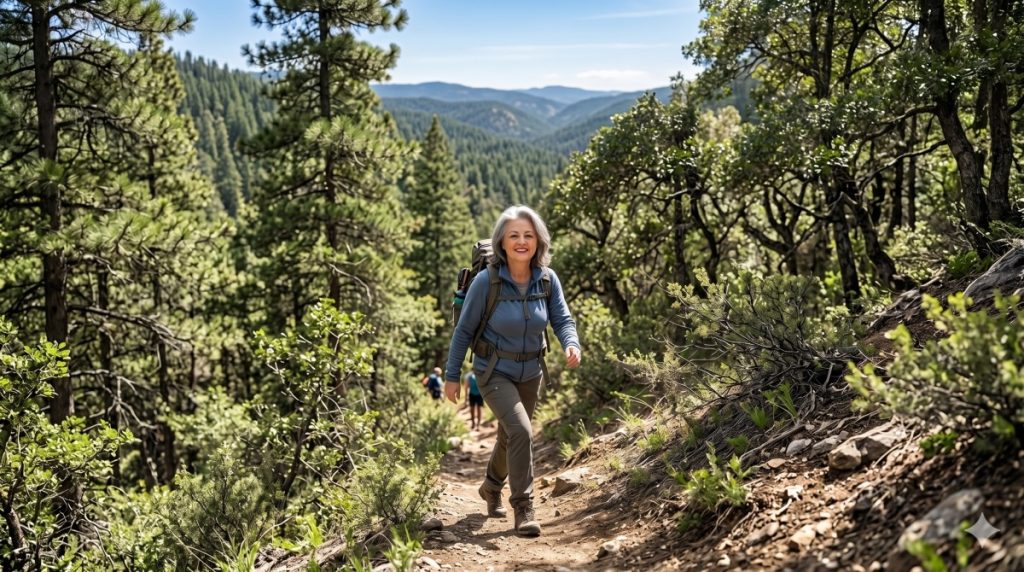
“What I underestimated completely was how adapted modern bodies become to the environments and footwear they have used for decades. Evolutionary theory does not automatically protect people from transition injuries.”
Your Feet Are Not The Right Place To Start Experimenting!
There are certain ideas in the wellness and longevity world that sound so logical and convincing at first that it becomes difficult to imagine they could possibly go wrong. Barefoot shoes were one of those for me.
The philosophy seemed almost impossible to argue against initially. Human beings evolved walking barefoot for thousands of years. Modern shoes are heavily cushioned, narrow, restrictive, elevated at the heel, and often disconnected from natural foot mechanics. Barefoot shoe advocates argued that most modern footwear weakens the feet, alters posture, disrupts gait mechanics, and contributes to long term dysfunction. At first the argument felt deeply persuasive.
Brands like Vivobarefoot market barefoot footwear not simply as shoes but as a return to natural human movement. Stronger feet, better posture, improved biomechanics, more connection to the ground, better alignment, greater foot freedom, I even read comments about the ground pressuring the Traditional Chinese pressure points in the foot, and therefore having healing effects. I’m a huge fan of going back to our origins and this all all sounded incredibly sensible and exactly my kind of thing to try.
What I did not fully understand at the time was that transitioning the modern body back toward barefoot mechanics after decades of conventional footwear is not always simple, gentle or universally beneficial.
My own experience with barefoot shoes became one of the most frustrating and physically painful lessons I have had within the wider wellness world because what started as an attempt to improve movement and long-term health ultimately contributed to plantar fasciitis and 6 whole months of foot pain and physiotherapy.
That experience fundamentally changed how I think about health trends, biomechanical theories, and the difference between evolutionary ideals and modern physical reality.
The Beginning of Barefooting
My interest in barefoot shoes didn’t develop gradually. It was by referral from a trusted health practitioner friend. She had the best intentions for me no doubt. We took a day trip to the seaside where we walked barefoot on the beach. I noticed her amazing looking barefoot shoes and was very intrigued. I decided to try and purchased a pair on sale. The feeling was incredible. I could feel every hump and bump on the road.
We then started planning to go on a hike in Scotland and it was going to be my first ever hiking trip. We decided to do daily and weekly gradually increasing walks to prepare for it. At that point, I made a huge investment at the time, £200 on walking boots by Vivo Barefoot. Back in 2021, this was an enormous expenditure. I notice that they’re still about the same price today so it even feels cheap now, but back then, it was a huge investment for me.
Everything went well with the hiking trip, although the walking boots were quite slippery and didn’t have the grip of normal hiking boots. But they were comfortable enough. Upon return, I decided to keep up the good habits and joined a weekly walking group. Getting older seems to do that to you! But that’s when the problems started for me.
Did someone forget why shoes were invented?
One of the recurring themes in integrative health is the idea that modern life disconnects the body from natural movement patterns. Sitting constantly, walking on hard surfaces, restrictive footwear, reduced time outdoors, and sedentary routines are often blamed for chronic musculoskeletal dysfunction. Barefoot movement philosophy fits neatly into that broader narrative.
The argument itself is emotionally powerful because it appeals to something deeper than footwear alone. It suggests that modern humans have drifted away from how the body was naturally designed to function. The solution therefore becomes returning to more natural mechanics.
Barefoot shoes differ dramatically from conventional footwear in several key ways. The barefoot movement world often highlights wider toe boxes, zero drop soles, improved proprioception, stronger foot muscles, natural gait patterns, improved posture, reduced dependency on cushioning, better alignment. Can’t argue with any of that. They did feel amazing.
The marketing around Vivo Barefoot in particular felt highly convincing. The shoes looked modern, minimalist, and intelligent rather than overly sporty or orthopaedic. The brand also positioned itself around broader ideas of natural health, sustainability, movement quality, and human performance. At the time I genuinely believed I was making a healthier long term decision.
I had no significant expectation that wearing thinner more flexible shoes could create serious problems because the entire barefoot movement philosophy presents itself as fundamentally corrective and restorative. What I underestimated completely was how adapted modern bodies become to the environments and footwear they have used for decades. Evolutionary theory does not automatically protect people from transition injuries.
The Product
The philosophy behind barefoot footwear is that the foot functions best when allowed to move naturally rather than being stabilised artificially by heavily cushioned supportive shoes. Barefoot advocates often argue that conventional footwear weakens intrinsic foot muscles over time by reducing natural demand on the foot’s stabilising structures. The theory sounds compelling because there is truth within it.
Modern footwear absolutely alters biomechanics. Highly cushioned shoes change impact patterns. Narrow shoes affect toe positioning. Raised heels alter posture and gait mechanics. The foot does contain complex musculature designed to adapt dynamically to terrain and movement.
However, one of the biggest problems with barefoot shoe culture is that the transition process is often dramatically underestimated.
People who have spent decades wearing conventional shoes are not equivalent to humans raised barefoot throughout childhood. The body adapts structurally over time. Muscles, tendons, fascia, calf flexibility, ankle mobility, and gait mechanics all change according to long term loading patterns. Suddenly removing support and cushioning from those systems can create enormous strain if done too aggressively. This is the part that often receives insufficient attention in barefoot marketing.
The shoes themselves are not necessarily inherently bad. The issue is often the mismatch between idealised movement philosophy and the physical reality of modern conditioned bodies.
The Experience
At first the experience felt positive. The shoes felt light, flexible, and surprisingly freeing. Walking in them created a much stronger sense of ground contact and foot awareness compared to heavily cushioned trainers.
There was also a psychological effect. Wearing barefoot shoes made me feel proactive about health and movement quality. The entire philosophy carries an appealing sense of reclaiming natural human function from modern artificial environments.
Initially I interpreted the discomfort and muscle soreness as positive adaptation. Barefoot communities often normalise this stage heavily. Foot fatigue, calf tightness, and soreness are frequently described as signs that previously weak muscles are finally becoming active again. In moderation, some adaptation probably is normal. The problem was that the discomfort gradually shifted into something much more serious.
The pain began building slowly around the arch and heel area. At first it felt manageable. Then it became persistent. Morning pain became particularly noticeable, especially during the first steps after getting out of bed. Walking started feeling tight, inflamed, and increasingly uncomfortable. Eventually it became clear I was dealing with plantar fasciitis (Dr Google said so)
That experience completely changed my perception of the barefoot movement world because the messaging surrounding barefoot shoes often creates the impression that more “natural” automatically means safer or healthier. But natural movement still depends on context.
Modern humans spend most of life on hard artificial surfaces, often carrying stress, poor mobility, sedentary patterns, tight calves, weak glutes, altered gait mechanics, and decades of footwear adaptation. Simply removing cushioning does not magically reverse those realities overnight. One of the most frustrating aspects was how difficult recovery became once the plantar fascia became irritated chronically.
Because walking is so constant and unavoidable, foot pain becomes psychologically exhausting surprisingly quickly.
What also frustrated me was how strongly parts of the barefoot community dismissed negative experiences. There can sometimes be an almost ideological attachment to barefoot philosophy where injuries are blamed entirely on the user transitioning incorrectly rather than acknowledging that certain people may simply not tolerate minimalist footwear well. That absolutism started feeling increasingly problematic to me.
The Science
Scientifically, barefoot footwear research remains mixed and far more complicated than barefoot marketing often suggests. There is evidence supporting certain potential benefits of minimalist footwear and barefoot movement including increased foot muscle activation, wider toe splay, altered gait mechanics, improved proprioception, reduced heel striking in some runners.
There is also legitimate criticism of modern highly cushioned restrictive footwear, particularly shoes that excessively compress toe position or alter natural movement patterns significantly. At the same time, transition injuries associated with barefoot and minimalist footwear are well documented.
One of the key scientific issues is adaptation load. People raised walking barefoot from childhood often develop very different foot strength, tissue adaptation, and gait mechanics compared to individuals who suddenly adopt minimalist footwear after decades in supportive shoes.
Modern environments also differ radically from ancestral environments. Humans did not evolve walking primarily on concrete, pavements, office floors, and urban surfaces continuously.
I also think the wellness world often romanticises evolutionary arguments too simplistically. Humans evolved under conditions involving gradual lifelong adaptation and completely different lifestyles. That does not automatically mean abrupt barefoot transitions are universally beneficial in modern settings.
At the same time, I don’t think barefoot shoes are inherently harmful either. Some people genuinely seem to benefit from them substantially, particularly when transitions happen extremely gradually and individual biomechanics tolerate the change well. The problem is the tendency within health culture to turn nuanced ideas into universal solutions. Bodies vary enormously. Previous injuries matter. Mobility matters. Surface type matters. Transition speed matters. Tissue tolerance matters. Health trends often fail when nuance disappears.
The Outcome for Me
At the end of the day, I suffered excruciating pain for 6 months, I couldn’t go for long walks, my mobility and movement dramatically reduced, I incurred extra cost to the NHS via multiple GP visits and months of physiotherapy, not even including the cost of the incredibly expensive boots, shoes, slippers, insoles, heel balls and other foot exercise toys I had to purchase.
Looking back, my experience with barefoot shoes became one of the most valuable lessons I have had about wellness culture generally. Just because something sounds evolutionary, natural, logical, or biomechanically persuasive does not mean it will work safely for every person in every context.
The experience also taught me how easily health philosophies can become ideological. The barefoot movement sometimes presents itself almost like a moral correction to modern living rather than a nuanced biomechanical tool that may help some people while harming others.
Our bodies deserve respect during significant transitions. Modern tissues adapt slowly. Tendons adapt slowly. Fascia adapts slowly. The nervous system adapts slowly. For me personally, the attempt to move too aggressively toward minimalist footwear ultimately created more harm than benefit. I even wrote to medical doctors such as Dr Rangan Chatterjee whose weekly podcasts were heavily sponsored by Vivo Barefoot at the time. He didn’t respond of course, and the sponsorship carried on. I would have expected a GP to be more responsible when personally recommending the use of products via sponsorships (he does keep saying his whole family wears only Vivo Barefoot shoes now).
That does not mean barefoot shoes are universally bad. But it does mean people deserve much more balanced information than the highly idealised narratives often presented online. I no longer believe health solutions should be treated as universal identities or philosophies. I think the body constantly requires observation, flexibility, humility, and willingness to change direction when something stops working.
The most important lesson was probably this. Health trends become dangerous the moment people stop listening honestly to their own bodies because the ideology sounds convincing. For me, barefoot shoes are a no-go. What happened to my collection of the barefoot shoes? They all went to new buyers on Vinted. I did warn in my descriptions the pain they caused me but it seems like these items are more of a fashion choice than a health one these days.
Previous Articles
- A Brilliant Life Is an Accumulation of Many Brilliant Days – Here’s My Perfect Health Day
- A Simpler Way to Eat Healthy Meals Without the Cognitive Overload
- My Poor Feet, Barefoot Shoes and Plantar Fasciitis
- Yoga, Vinyasa Flow, Morning Sun Salutations – I Do It Quietly and All by Myself at Home
- I Tried the ADS Vitality Chronotype Test and Discovered I’m a Strong Evening Owl